A standard portable toilet suits construction crews, small outdoor gatherings, and property projects that need one basic restroom without running water or power. On a job site the unit works whether or not the property…
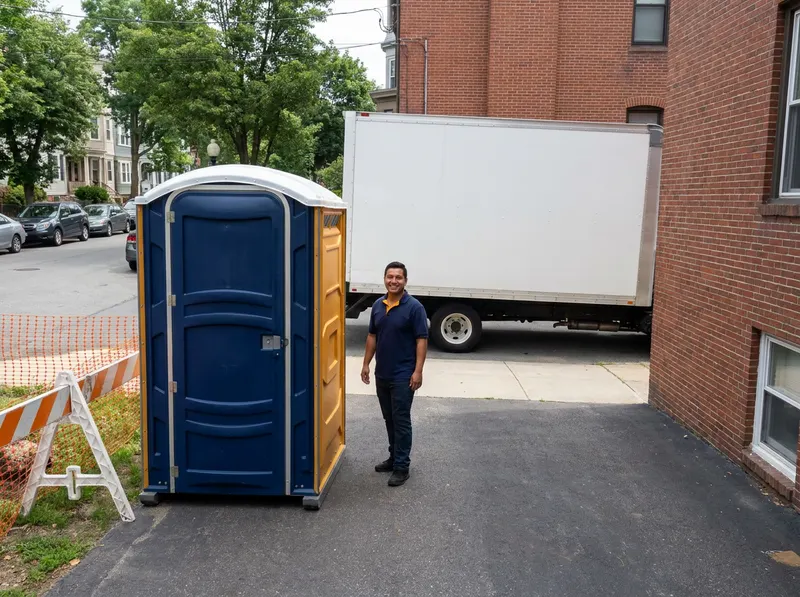
A standard portable toilet suits construction crews, small outdoor gatherings, and property projects that need one basic restroom without running water or power. On a job site the unit works whether or not the property is connected to sewer, which matters for gut-renovation projects in Dorchester triple-deckers and new-build lots in Hyde Park where plumbing is cut for weeks. One standard unit covers roughly 10 workers for a 40-hour week under common industry sizing guidance from the Portable Sanitation Association International; a crew larger than that, or an event running past a single day, is where a second unit or a weekly-plus service schedule keeps the tank from filling.
Decision-fit comes down to water, comfort, and traffic. If the site is a paved driveway or fenced lot and the users are a small crew, the standard non-flush unit is the practical choice, it needs no hookups and drops onto any firm, level surface. If the setting is a backyard wedding in West Roxbury or a customer-facing event in Back Bay, a flushing or deluxe unit with a sink and interior light reads better, and that trade-off is comfort and appearance against a higher per-unit rate. For a wheelchair-accessible requirement, the ADA-compliant unit is a separate wider model, not this standard footprint.
Placement in Boston carries real constraints. Units set on a public sidewalk or a metered street stretch, common near row-house jobs in South Boston, Charlestown, and parts of Roxbury, require a City of Boston occupancy or street-use permit, which the customer arranges before delivery. On private ground, a firm surface within about 15 feet of where the delivery truck can pull matters, because the service truck's hose reaches only so far up a Jamaica Plain hillside driveway or a tight East Boston back lot. Narrow one-way streets and resident-parking blocks in these neighborhoods can affect the delivery window, so noting access details when booking prevents a missed drop.
Booking runs in three steps: first, confirm the address, start date, and rental length by phone or text; second, the delivery is scheduled, usually the next business day, and the driver places and levels the unit; third, a weekly service visit pumps the tank and restocks paper and sanitizer until pickup is called. The quoted rental rate covers delivery, one weekly cleaning, and pickup within Boston; heavily used sites that need a second or third weekly service, or a location outside standard Boston delivery zones, can add cost, which is confirmed before the unit ships.
Every job gets a firm, written price after a free on-site visit.
Tell us about your standard portable toilet rental job in Boston and we'll send a clear, written quote, usually the same day.
 Mike's Portable Toilets